A flat, wide lead edge and a snapped lead are different annoyances. The Uni Kuru Toga Roulette addresses the first by turning the lead as you write. The Zebra DelGuard addresses the second with springs that respond to writing pressure. Both are 0.5 mm pencils, so buy for the behaviour you want rather than the number on the barrel.
| Uni Kuru Toga Roulette | Zebra DelGuard | |
|---|---|---|
| Main mechanism | Lead rotation | Dual-spring lead protection |
| Grip | Knurled metal | Textured grip |
| Good match | Notes with frequent pencil lifts | Heavy-handed writing and frequent lead breaks |
| Does not specifically solve | Snapping from excessive pressure | A flattened lead edge |
When the Roulette’s rotation helps
Uni’s Kuru Toga mechanism turns the lead in small steps as the pencil is pressed and released. During handwriting, repeated lifts give the mechanism many opportunities to rotate the point. That can keep line width more even as the lead wears. The Roulette version pairs the mechanism with a knurled metal grip. Long strokes made without lifting the pencil do not trigger the mechanism as often, so its advantage is less direct for continuous sketch lines.
Uni Kuru Toga Roulette 0.5 mm, gun metallic
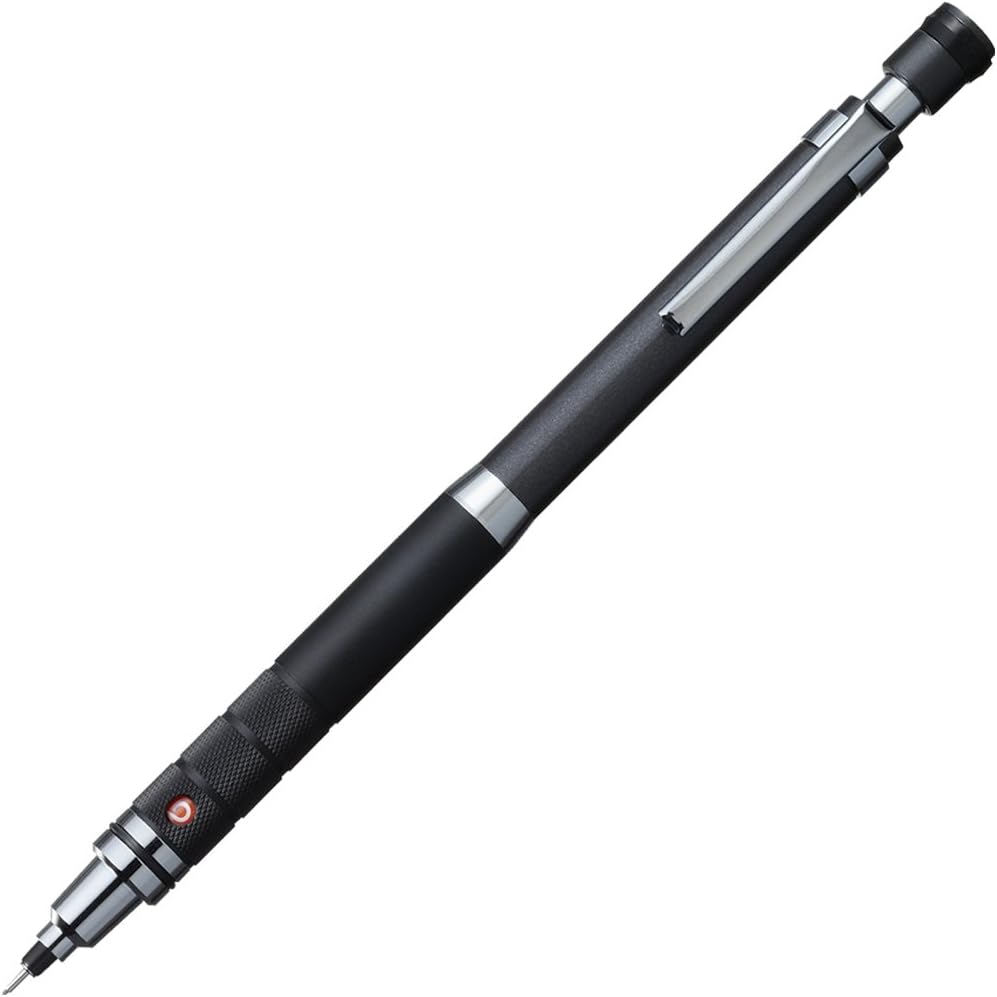
Mechanism: Lead rotates during writing
Grip: Knurled metal
Lead: 0.5 mm
When the DelGuard’s springs help
Zebra’s explanation shows two springs working against pressure applied vertically or at an angle. If you repeatedly snap 0.5 mm lead while writing, this is the feature to try. The DelGuard has a textured grip and an eraser beneath the cap. Its point does not rotate for you, so a lead edge can still wear unevenly during long sessions.
Zebra DelGuard 0.5 mm, black (P-MA85-BK)
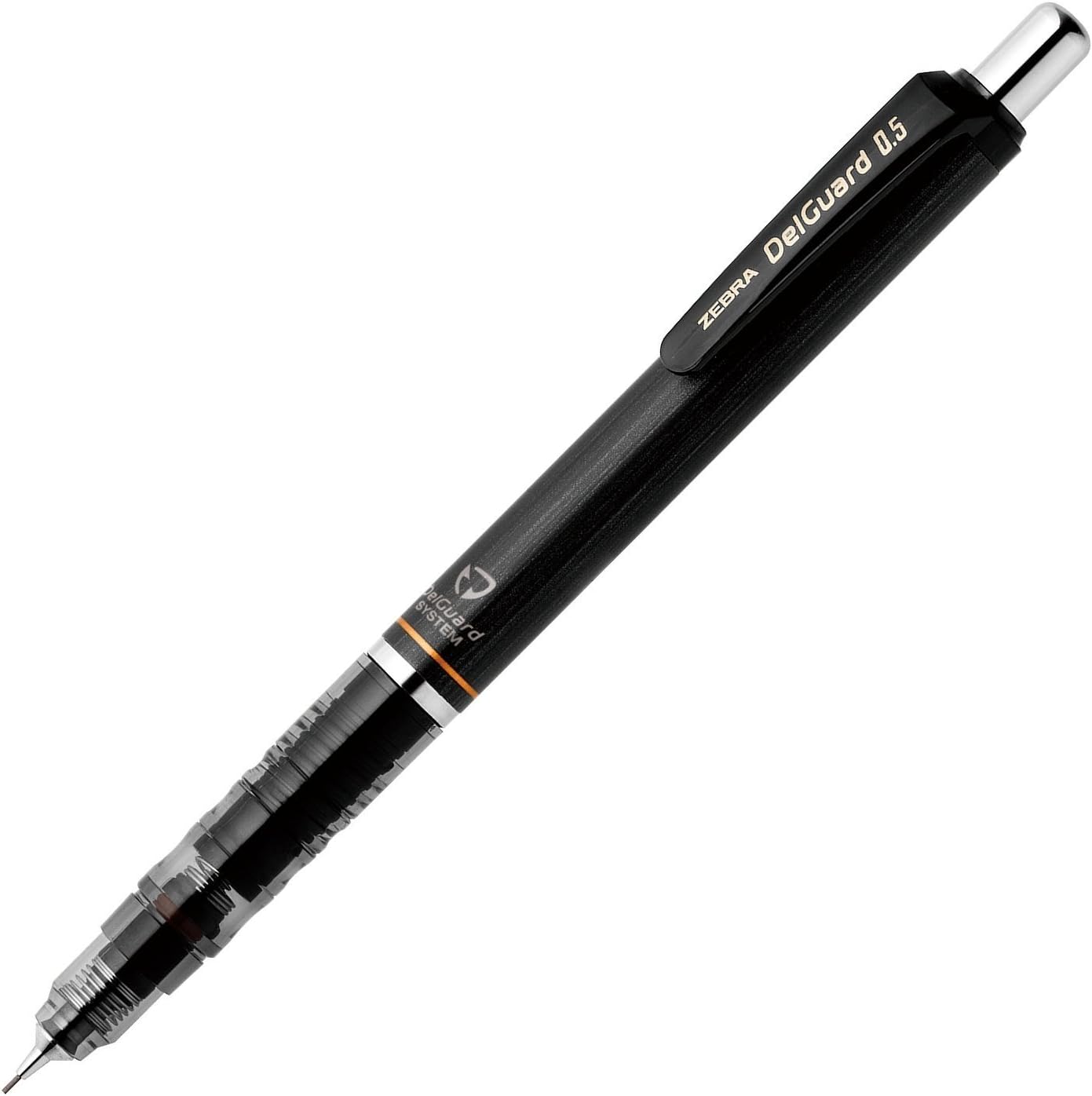
Mechanism: Dual-spring lead protection
Grip: Textured
Lead: 0.5 mm
How each mechanism responds to your writing motion
The Roulette benefits from repeated contact and release. Each lift between letters gives the mechanism another opportunity to turn the graphite, spreading wear around its circumference. That matters when a pencil begins a page with a narrow line and ends with a broad, slanted one. The DelGuard does not change how the lead wears; its springs react when pressure threatens to snap the point. A long uninterrupted stroke gives the Roulette fewer rotation events, while a very light writer may rarely engage the DelGuard’s protection. This is why the best match depends on the interruption you actually experience. If you find broken lead in the pencil tip, look first at the DelGuard. If your lead stays intact but your handwriting thickens, look first at the Roulette. Both pencils still need the correct 0.5 mm version of lead, and neither mechanism turns an unsuitable writing angle into a comfortable grip.
Pick the problem you actually have
Choose the Roulette if your notes gradually change from fine lines to broad ones and you like a metal grip. Choose the DelGuard if you press hard, write at a steep angle or often stop to clear broken lead. If you instead need a narrow sleeve for ruler work, compare the GraphGear 1000 and rOtring 600. All four models appear in the mechanical pencil comparison.